
TRUST DRIVES VALUATION
Up to 44% of a company's market value is directly attributable to CEO reputation and personal brand strength.
AUTHENTICITY BUILDS CONFIDENCE
Transparent, human-centered leadership creates investor confidence and employee engagement that translates to business performance.
PERSONAL VISION BECOMES CORPORATE STRATEGY
When CEOs effectively communicate their vision, it becomes the company's competitive advantage and market positioning.
When the Leader Becomes the Brand
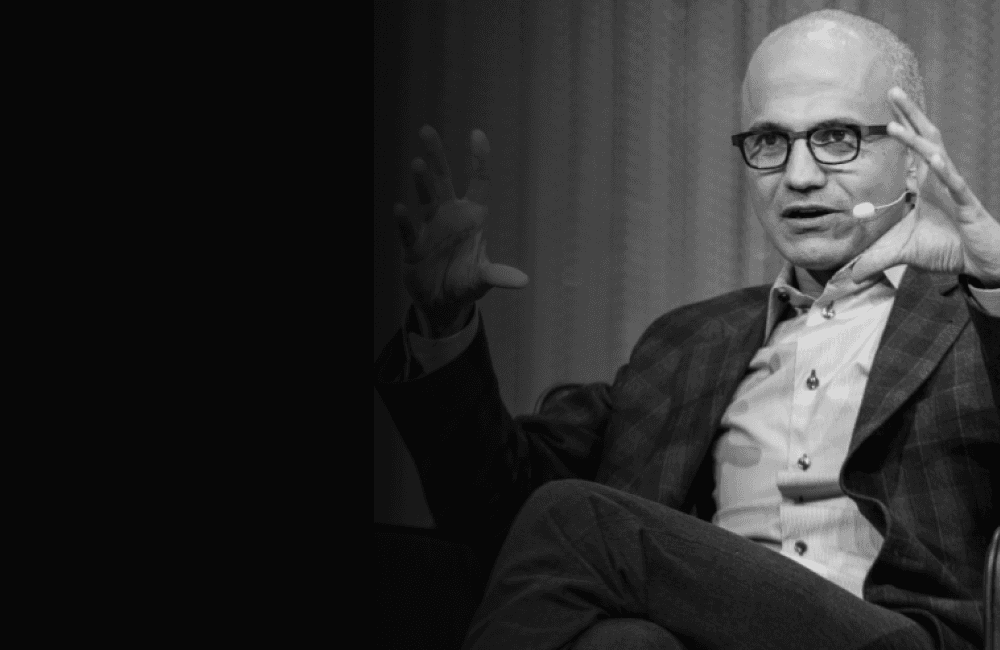
Satya Nadella's transformation of Microsoft demonstrates how CEO personal branding directly impacts company valuation. Under his leadership, Microsoft's market capitalization reached $3 trillion in 2024, driven not just by product innovation but by his authentic leadership style and clear strategic vision.
This goes beyond celebrity CEOs or social media presence. We're seeing how authentic leadership communication creates measurable business value and competitive advantage.
Trust as a Measurable Asset
Research shows that 44% of a company's market value is directly attributable to CEO reputation. Nadella's emphasis on empathy, growth mindset, and human-centric innovation didn't just change Microsoft's culture. The approach reassured investors about the company's long-term prospects and strategic direction.
This trust translates into tangible business benefits: easier capital raising, better talent acquisition, stronger customer relationships, and more favorable media coverage. Personal brand becomes corporate infrastructure.
Authenticity Over Polish
Nadella's success comes from genuine transformation rather than manufactured image. His authentic communication about Microsoft's cultural shift from "know-it-all" to "learn-it-all" resonated because it reflected real organizational change, not just marketing messaging.
This authenticity creates a competitive moat that's difficult to replicate. While competitors can copy products or strategies, they can't easily duplicate the trust and credibility that comes from consistent, authentic leadership communication.
Vision as Competitive Advantage
When CEOs effectively articulate their vision, it becomes the company's strategic differentiator. Nadella's focus on empowering others and democratizing technology didn't just inspire employees. The vision positioned Microsoft as a platform for human potential rather than just a technology company.
This vision-driven approach creates alignment across all stakeholders: employees understand their purpose, investors understand the strategy, and customers understand the value proposition. The result is organizational coherence that drives superior business performance.
Recent Posts

Stay in the loop
Get the latest industry insights delivered straight to your inbox.